Category: Finance & Money

  • How Credit Scores Work Tips to Improve Your Credit Score

    How Credit Scores Work Tips to Improve Your Credit Score

    Did you know nearly 30% of Americans don’t know how their financial profiles affect their borrowing power? Your financial reputation is key to big life milestones like buying a home or getting a low-interest auto loan.

    Learning how credit scores work is crucial for managing your finances. In the U.S., lenders use these numbers to judge your reliability and risk. Knowing what affects these scores lets you shape your financial future.

    By taking proactive steps today, you can boost your borrowing power and financial freedom. Smart money habits can change your financial life and open new doors. Let’s look at key strategies to strengthen your financial base.

    Key Takeaways

    • Your financial rating is key for lenders to judge your reliability.
    • Small, consistent actions can lead to big improvements in borrowing power.
    • Knowing what affects your rating helps you make smart financial choices.
    • Managing your accounts well is crucial for long-term financial freedom.
    • Building a strong reputation takes time, but the future benefits are huge.

    Understanding How Credit Scores Work

    Understanding credit scores is key to your financial future. The system might seem complex, but it’s a way for lenders to check your risk.
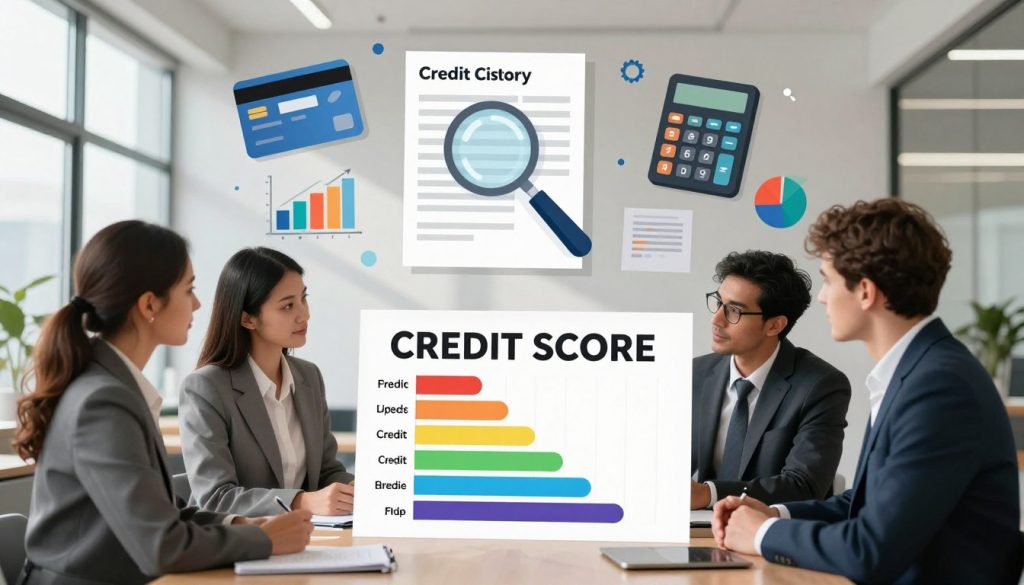
    A visually engaging illustration depicting the concept of credit scores. In the foreground, a diverse group of three professionals in business attire, two women and one man, are discussing a large, colorful chart representing credit score ranges and factors like payment history, credit utilization, and length of credit history. The middle ground features floating icons symbolizing credit cards, a magnifying glass inspecting a credit report, and a calculator surrounded by graphs and pie charts that convey data analysis. The background is a sleek office environment with large windows allowing natural light to pour in, casting gentle shadows. The overall atmosphere is informative and collaborative, designed to evoke understanding and professionalism.

    The Core Components of FICO Score Calculation

    The FICO score calculation is used by most lenders in the U.S. It looks at five main credit score factors to judge your creditworthiness.

    • Payment History (35%): Your record of paying bills on time.
    • Amounts Owed (30%): How much credit you’re using compared to what’s available.
    • Length of Credit History (15%): How long your accounts have been open.
    • New Credit (10%): Recent inquiries or new accounts.
    • Credit Mix (10%): The variety of credit types you manage.

    Why Your Credit Score Matters for Financial Opportunities

    The importance of credit scores is huge when you apply for big purchases. A high score means you’re reliable, leading to lower interest rates on loans.

    Keeping a strong score saves you thousands in interest over time. But a low score can limit your options or make borrowing very expensive.

    Breaking Down the Credit Score Range

    The standard credit score range is 300 to 850. Knowing your score helps you set financial goals.

    Score Range Rating Financial Impact
    800–850 Exceptional Best interest rates
    670–739 Good Favorable terms
    300–579 Poor Limited access

    Striving for a “Good” or “Exceptional” score is wise for your financial future. By watching your score, you can improve it over time.

    Debunking Common Credit Score Myths

    Understanding personal finance can feel like a maze of old information and myths. Many believe false things about how their financial history is tracked. This can cause a lot of stress. Understanding credit scores is key to taking control of your financial future.

    Separating Fact from Fiction Regarding Credit Checks

    One big credit score myth is about the difference between inquiry types. A hard inquiry happens when a lender checks your report for a loan. This can slightly lower your score because it shows you’re looking for new debt.

    On the other hand, soft inquiries happen when you check your own report or when a company checks it for pre-approved offers. These don’t affect your score. Knowing the difference helps you avoid unnecessary worry.

    Understanding the Impact of Checking Your Own Score

    You might think checking your report often will hurt your score, but it won’t. Checking your own score is a soft inquiry and is a highly recommended habit. It helps you catch errors early and track your progress.

    Inquiry Type Impact on Score Who Initiates It
    Hard Inquiry Minor, temporary dip Lenders (Banks, Auto loans)
    Soft Inquiry No impact You, Employers, Pre-approvals
    Self-Monitoring No impact Individual consumers

    Knowledge is your best tool for a strong financial profile. Don’t let false information stop you from being proactive. Regularly checking your data helps you stay on track for your long-term goals.

    Actionable Strategies to Improve Your Credit Score Quickly

    Improving your credit score quickly is possible with the right focus. By taking action today, you can change your financial situation. This opens doors to better interest rates.

    Managing Your Payment History Effectively

    Your payment history is key to your credit profile. Lenders look for reliable and consistent financial habits.

    Use automatic payments or set reminders to avoid late fees. A single late payment can hurt your score. Staying on top of payments is crucial for success.

    “The secret of getting ahead is getting started.”

    Mark Twain

    Optimizing Your Credit Utilization Ratio

    Your credit utilization ratio shows how much credit you use. Keeping this low can quickly boost your score.

    Try to keep balances under 30% of your total limits. Lowering this ratio can improve your credit health even more.

    Tips for Paying Down High-Interest Balances

    High-interest debt can weigh heavily on your finances. Here are ways to tackle these balances:

    Strategy Best For Primary Benefit
    Debt Avalanche High-interest rates Saves money on interest
    Debt Snowball Small balances Builds psychological momentum
    Balance Transfer Consolidation Simplifies monthly payments

    Diversifying Your Credit Mix Responsibly

    Lenders value a variety of credit types to gauge your responsibility. A mix of revolving and installment loans shows you can handle different financial products.

    But only open new accounts when it fits your budget. Applying for too many at once can harm your score. Focus on managing what you have to keep your credit strong.

    Conclusion

    Getting a great credit score takes time and effort. You now know how to handle FICO scores and what lenders look for. This knowledge will help you feel more confident.

    Building a good credit history with lenders like Chase or American Express is a slow process. Think of it as a long-term investment, not a quick fix. Making small, steady changes can have a big impact on your credit score.

    Make sure to set up automatic payments to avoid late fees. Keep your credit card balances low to show lenders you can manage your money well. Also, check your credit reports from Equifax, Experian, and TransUnion often to catch any mistakes.

    You have the power to improve your financial future. Start using these tips today to get better interest rates and access to top credit cards. Let us know how you’re doing or if you need help on your journey to financial freedom.

    FAQ

    How do credit scores work, and why do they matter for my financial future?

    A: How credit scores work is simple. They are a number based on your credit report. Lenders like Chase or Wells Fargo use them to guess if you’ll pay back debt. A good score means you can get loans with lower interest rates. This can save you a lot of money and give you more freedom with your finances.

    What are the primary credit score factors used in a FICO score calculation?

    The FICO score calculation looks at five main things. These are payment history (35%), amounts owed (30%), length of credit history (15%), new credit (10%), and credit mix (10%). By focusing on these, you can improve your score with the three big bureaus: Experian, Equifax, and TransUnion.

    What is the standard credit score range I should aim for to get the best rates?

    Credit scores range from 300 to 850. A score of 670 to 739 is good. But aiming for 740–799 or above will get you the best deals. This includes top products and the lowest interest rates from places like American Express or Capital One.

    What are some common credit score myths I should be aware of?

    One big myth is that checking your score lowers it. But checking on sites like Credit Karma or through your Discover card is safe. It’s called a “soft inquiry” and doesn’t affect your score. Only “hard inquiries” from lenders can lower your score.

    Do you have any specific tips for improving credit score quickly?

    To improve credit score quickly, focus on your credit utilization ratio. Pay down high-interest balances. Keep your usage under 30%—ideally under 10%—of your total credit. Also, set up autopay with Citibank or your local credit union. This helps avoid late payments, which can hurt your score.

    Why is understanding credit scores and credit mix important for my reliability?

    A: Understanding credit scores means knowing about your “credit mix.” This is the variety of accounts you have. Lenders like to see you can handle different debts, like credit cards and loans. Showing you can manage different types of debt makes you look reliable to lenders.
  • Best Budgeting Apps That Help You Save Money Fast

    Best Budgeting Apps That Help You Save Money Fast

    Did you know nearly 60% of Americans live paycheck to paycheck? They often don’t know where their money goes each month. This shows a big problem with managing money in today’s fast world.

    But, you can take back control with modern digital tools. These money management apps make tracking expenses easy. They sort out your daily buys for you.

    Using financial planning apps helps you make better spending choices. These savings apps help change your spending habits. They help you build a safer future for your family.

    Key Takeaways

    • Automated tracking removes the stress of manual expense logging.
    • Real-time insights help you identify and cut unnecessary monthly costs.
    • Digital tools provide a clear roadmap for reaching your long-term financial goals.
    • Consistent monitoring fosters better spending habits over time.
    • Secure platforms ensure your sensitive data remains protected while you grow your wealth.

    Why You Need the Best Budgeting Apps for Financial Success

    Getting financially free starts with knowing where your money goes each month. Many find it hard to save because they don’t see their spending clearly. With top budgeting tools, you get a digital helper that shows where your money goes.

    Personal finance apps connect your income to your future goals. They turn complex data into simple charts and graphs. Seeing your spending helps you spot unnecessary costs that block your dreams.

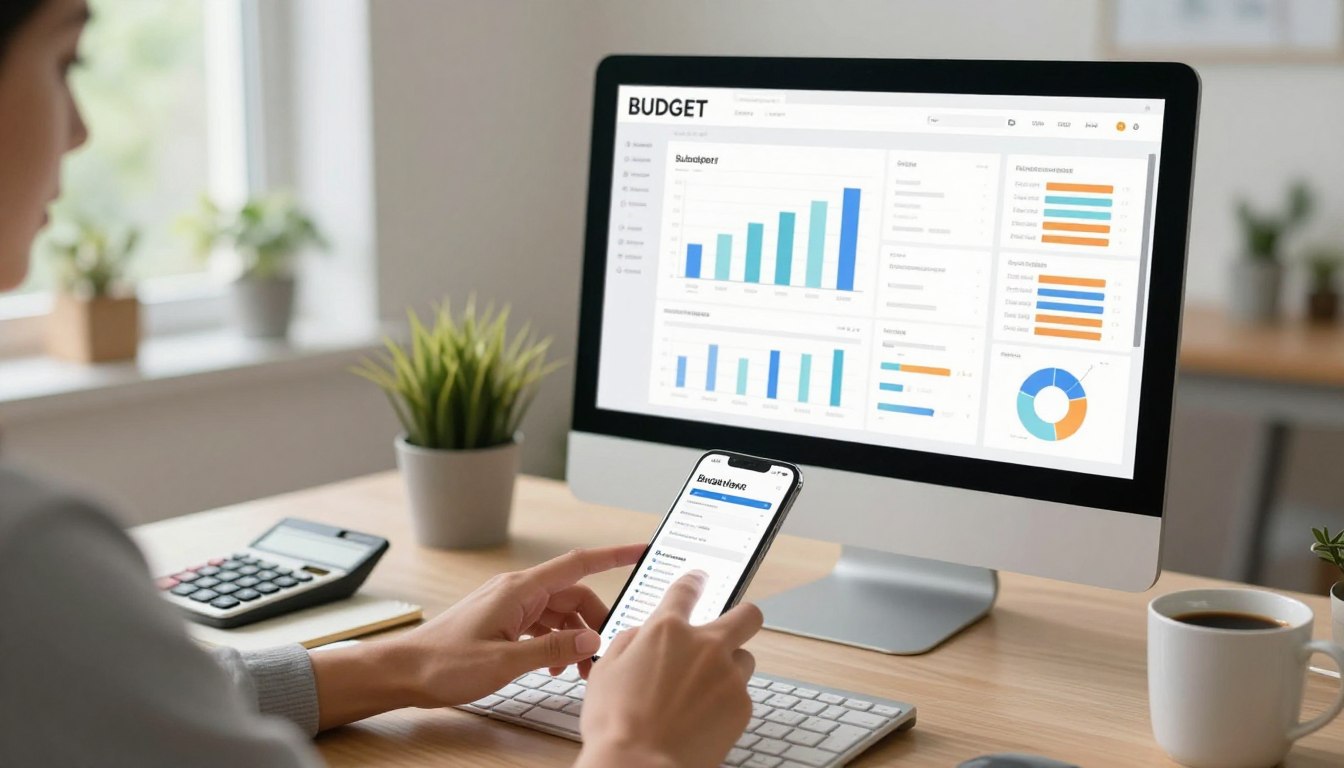
    A visually engaging workspace illustrating the concept of top budgeting tools for financial success. In the foreground, a sleek laptop displays colorful graphs and chart analytics showcasing budget breakdowns. Beside it, a smartphone screen shows a popular budgeting app interface, highlighting user-friendly features. In the middle, a desk is adorned with notebooks and a pen, symbolizing planning and tracking. The background features a modern office space with large windows letting in soft, natural light, enhancing the atmosphere of productivity. The scene should convey a sense of organization, motivation, and financial empowerment, with a clean, minimalist aesthetic. Use soft focus on the background to emphasize the foreground elements, capturing a dynamic yet professional vibe.

    Using strong budgeting software helps you set savings goals. You can track your savings in real-time, not guess. This way, you stay on track even with surprise expenses.

    An easy-to-use expense tracker app makes logging transactions simple. No more paper receipts or memory alone. These budget management tools help keep your finances organized and stress-free.

    Feature Manual Tracking Budgeting Apps
    Data Accuracy Prone to errors Automated precision
    Time Required High effort Minimal effort
    Goal Setting Difficult to track Real-time progress
    Security Physical risk Encrypted protection

    Top-Rated Money Management Apps to Accelerate Your Savings

    Managing your money well is not just about wanting to. It needs the right tools. Many find it hard to track their spending. But, money management apps make it easier. With the right tools, you can control your finances and reach your goals sooner.

    YNAB (You Need A Budget) for Zero-Based Planning

    YNAB is a strong budgeting software that makes sure every dollar has a job. It uses zero-based planning to allocate your income. This helps you avoid living paycheck to paycheck.

    Rocket Money for Subscription Management

    Rocket Money helps you keep track of recurring charges. It’s a smart expense tracker app that finds unused subscriptions and cancels them for you. It’s a great way to save money without changing your daily habits.

    Goodbudget for Envelope-Style Tracking

    Goodbudget modernizes the envelope system. It lets you divide your income into categories. This helps you avoid overspending. It’s a reliable savings app that keeps your spending in check.

    Empower for Comprehensive Net Worth Monitoring

    Empower gives you a big picture view of your finances. It links your accounts to track investments, savings, and debt. This budgeting software is great for those who want to see their wealth grow over time.

    App Name Primary Focus Best For
    YNAB Zero-Based Budgeting Strict Planning
    Rocket Money Subscription Control Reducing Waste
    Goodbudget Envelope System Category Tracking
    Empower Net Worth Analysis Wealth Building

    How to Choose the Right Financial Planning Apps for Your Lifestyle

    Choosing the best app for your money is a personal process. It requires careful thought. Everyone manages their income differently. So, the top budgeting tools you select should match your daily habits and long-term vision.

    Assessing Your Primary Financial Goals

    Before downloading any software, define what you want to achieve. Are you trying to crush high-interest debt, or saving for a home? Identifying your primary objective helps you filter through the noise.

    Consider these common goals when selecting your financial planning apps:

    • Debt Reduction: Look for tools that offer automated payoff calculators.
    • Savings Growth: Prioritize apps with “round-up” features or high-yield account integration.
    • Spending Awareness: Choose platforms that provide clear, visual breakdowns of your monthly habits.

    Evaluating Security and Privacy Features

    Your financial data is sensitive. So, you must prioritize safety above all else. When you use personal finance apps, ensure they employ bank-level encryption. This keeps your information secure from unauthorized access.

    “Security is not just a feature; it is the foundation of trust in digital finance. Always verify that your chosen platform uses multi-factor authentication to protect your accounts.”

    Look for providers that offer read-only access to your bank accounts. This ensures that even if an app is compromised, your actual funds remain completely safe and untouchable.

    Considering Subscription Costs Versus Potential Savings

    It is natural to wonder if a paid app is worth the monthly fee. To decide, compare the subscription price against the potential money you might save by curbing unnecessary spending.

    Many budget management tools offer free versions, but premium tiers often provide deeper insights. Use this simple comparison to guide your decision:

    Feature Type Free Version Premium Version
    Data Syncing Manual Entry Automatic
    Goal Tracking Basic Advanced
    Support Community Priority

    If an app helps you save hundreds of dollars a year by identifying wasted subscriptions, the small monthly cost is usually a smart investment. Always calculate your potential return before committing to a long-term plan.

    Conclusion

    Building wealth is not just about earning money. It also means understanding your spending and setting long-term goals.

    Using digital tools like YNAB, Rocket Money, Goodbudget, or Empower changes how you manage your money. These tools help you make better choices every day.

    You have the power to change your financial future now. Try one of these apps to see which one works best for you. Making small changes in how you track your money can lead to big gains over time.

    Your journey to financial freedom is unique. These tools are here to help you stay on track and reach your goals. Download your favorite app today and start building a secure future.

    FAQ

    What are the primary benefits of using the best budgeting apps for my daily finances?

    Top budgeting tools give you control right away. They automate tracking and categorize your spending. These apps act like digital assistants, spotting wasteful spending and guiding you to better financial choices every day.

    How can an expense tracker app help me save money faster?

    An expense tracker app shows where your money goes in real-time. Apps like Rocket Money cancel unwanted subscriptions to help you save. YNAB ensures every dollar works toward your goals through zero-based planning.

    Which personal finance apps are best for monitoring my total net worth?

    Empower is top for watching your net worth. It combines your investments and bank accounts. This gives a clear view of your assets and debts in one place.

    Is it worth paying for premium budgeting software?

    Consider the cost against potential savings. Paid apps like Goodbudget or YNAB offer insights that can save you money and help you avoid debt. They can help you reach goals faster.

    How do financial planning apps keep my sensitive banking data safe?

    The best apps use strong encryption and multi-factor authentication. Look for features like read-only access and strong privacy policies. This ensures your info stays safe.

    Can money management apps help me with specific goals like buying a house or paying off debt?

    Yes! Most apps let you set specific goals. Use an expense tracker to track progress toward a down payment or debt payoff. This keeps your finances organized and stress-free.